
TLDR
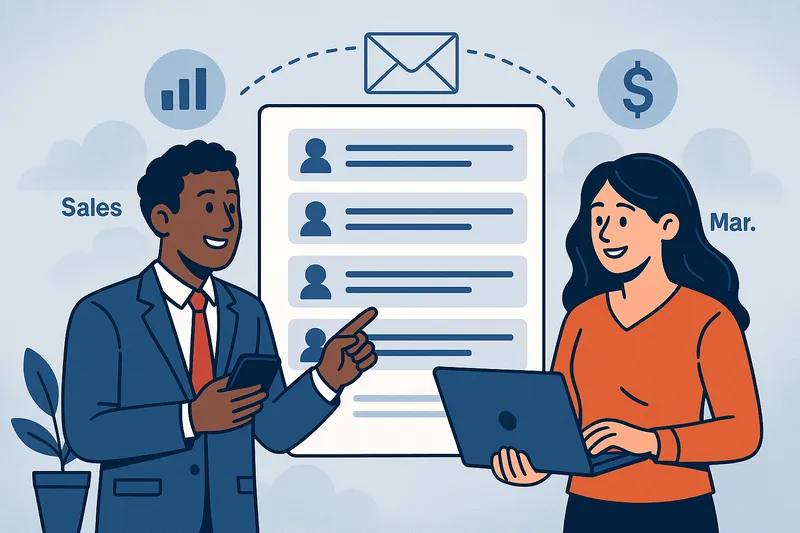
Most companies waste resources because their sales and marketing teams work from different contact lists, leading to duplicate outreach, inconsistent messaging, and missed opportunities. The solution? A shared, strategically-built email list that both teams use for their respective activities. When sales and marketing align on the same target accounts and contacts, companies see 36% higher customer retention and 38% higher sales win rates. This article outlines how to build and leverage a shared email list that turns marketing touchpoints into sales conversations and creates a unified revenue engine.
The Disconnect That Kills Conversions
Picture this: Your marketing team just launched a brilliant LinkedIn campaign targeting CTOs at mid-market SaaS companies. Meanwhile, your sales development team is cold-emailing the same CTOs with completely different messaging. The result? Confused prospects, wasted ad spend, and frustrated teams pointing fingers at each other.
This scenario plays out daily across thousands of B2B companies. Marketing generates “leads” that sales dismisses as low quality. Sales builds their own prospect lists without considering marketing’s insights. Both teams work harder, but revenue growth stagnates.
The root cause isn’t poor execution or bad intentions—it’s misaligned data. Your sales and marketing teams don’t need more leads—they need the same ones.
A shared, well-defined, and enriched email list serves as the bridge between marketing touchpoints and sales conversations, transforming how your revenue teams collaborate and convert prospects into customers.
Why Sales and Marketing Need to Align on Target Accounts and Contacts
The traditional approach creates silos that kill conversions. Marketing typically focuses on generating volume—casting wide nets to capture as many leads as possible. Sales prioritizes quality, preferring to work smaller lists of highly-qualified prospects they can research and personalize outreach for.
These separate approaches lead to separate tools, separate goals, and ultimately, separate lists. The consequences are costly:
Duplicate outreach confuses prospects and damages brand perception. When the same person receives a marketing email about “streamlining operations” and a sales email about “cutting costs” within days of each other, your company appears disorganized and generic.
Inconsistent messaging dilutes your value proposition. Marketing might emphasize innovation while sales focuses on ROI, leaving prospects unclear about your core benefits.
Wasted resources multiply when teams target different audiences. Ad spend targets one set of companies while SDR effort focuses on another, reducing the compounding effect of multi-touch engagement.
Research consistently shows that alignment drives results. Companies with aligned marketing and sales functions achieve 36% higher customer retention and 38% higher sales win rates. When both teams target the same accounts and personas, they create reinforcing touchpoints that accelerate deal velocity and improve win rates.
What a Shared Email List Actually Means
A truly shared email list goes far beyond combining two spreadsheets. It represents a strategic asset built from aligned thinking and enriched with actionable intelligence.
The foundation starts with a mutually defined Ideal Customer Profile (ICP) that both teams helped create. This isn’t marketing’s buyer persona or sales’ target account profile—it’s a unified definition of the companies and people most likely to buy, based on historical data and market insights both teams contribute.
The list gets enriched with firmographics and technographics that matter for both marketing campaigns and sales conversations. Company size, industry, and revenue help marketing segment campaigns while technology stack and recent funding events give sales conversation starters.
Smart shared lists include multiple stakeholders per account to enable multi-threading. While marketing might nurture the entire buying committee with educational content, sales can simultaneously build relationships with individual decision-makers and influencers.
Finally, effective shared lists are tagged and segmented for persona-specific messaging. The CTO and CFO at the same company need different value propositions, but they should feel like they’re engaging with the same vendor throughout their buying journey.
Shared List vs. Traditional Approach: Key Differences
| Aspect | Traditional Separate Lists | Shared Strategic List |
|---|---|---|
| Target Audience | Different prospects for each team | Same accounts, coordinated contacts |
| Messaging | Disconnected value propositions | Consistent, reinforcing messages |
| Data Quality | Varies by team/tool | Unified, regularly updated |
| Outreach Timing | Random, often overlapping | Coordinated sequence |
| Attribution | Unclear source of conversions | Full funnel visibility |
| Resource Efficiency | Duplicate efforts, wasted spend | Maximized ROI from combined efforts |
| Prospect Experience | Confusing, inconsistent | Professional, cohesive |
| Results | 20-30% lower win rates | 38% higher win rates |
How to Build It Together: A Joint Sales-Marketing Workflow
Creating a shared email list requires collaboration from day one. Here’s the step-by-step process that successful revenue teams follow:
Step 1: Co-define the Ideal Customer Profile
Bring sales and marketing leaders together to analyze your best customers. Look at industry, company size, geographic location, and buying triggers. Include technographic data like tools they use and trigger events like recent funding or leadership changes. Both teams should contribute insights from their respective touchpoints with prospects and customers.
Step 2: Identify Target Accounts (Tiers 1, 2, 3)
Build a shared account list organized by priority tiers. Tier 1 accounts get the highest-touch treatment from both teams. Tier 2 accounts receive regular nurturing with periodic sales outreach. Tier 3 accounts enter automated workflows with sales activation based on engagement thresholds.
Step 3: Layer in Decision-Makers
For each target account, identify the complete buying committee. Marketing needs awareness-stage contacts to nurture with educational content. Sales needs decision-makers and influencers for direct outreach. The same list serves both needs when properly segmented.
Step 4: Enrich and Verify Contacts
Raw contact data needs human verification and recent updates to ensure deliverability and relevance. This includes verifying email addresses, updating job titles, and confirming the person is still with the company. Outdated data kills campaigns and damages sender reputation.
Step 5: Sync Across Platforms
The shared list needs to flow seamlessly into your CRM, marketing automation platform, sales engagement tools, and advertising platforms like LinkedIn and Google. Consistent data across systems enables coordinated campaigns and accurate attribution.
How Marketing Uses the List
With a shared list in place, marketing can focus on warming up prospects before sales reaches out. This creates a more receptive environment for sales conversations and improves response rates.
- Warm-up campaigns introduce your brand and value proposition through newsletters, webinars, and educational content. Marketing tracks who engages with what content, building intelligence that sales can leverage in their outreach.
- Retargeting campaigns on LinkedIn, Google, and other platforms keep your company visible to prospects between direct sales touchpoints. When an SDR emails someone who’s been seeing your ads for weeks, the response rate improves dramatically.
- Personalized nurture journeys deliver relevant content based on job role, industry, and demonstrated interests. The CFO receives ROI-focused content while the CTO gets technical deep-dives, but both paths reinforce the same core value proposition.
- Lead scoring and handoffs become more meaningful when marketing can pass warm leads to sales with complete activity history. Instead of “this person downloaded a whitepaper,” marketing can say “this person engaged with three pieces of content about data security and attended our compliance webinar.”
How Sales Uses the Same List
Sales teams working from the shared list can prioritize their efforts more effectively and personalize their outreach using marketing intelligence.
- Prioritized outreach focuses on accounts and contacts showing the highest engagement with marketing content. An SDR might start their day by calling prospects who attended yesterday’s webinar rather than working through a cold list alphabetically.
- Cold email sequences and follow-up workflows become more relevant when sales can reference marketing touchpoints. “I noticed you downloaded our guide on API security” lands better than “I hope this email finds you well.”
- Multi-threading across job roles within target accounts creates internal alignment at the buying organization. While marketing nurtures the broader team with educational content, sales can build relationships with individual stakeholders and coordinate their buying process.
- Insights from marketing touches help sales personalize their approach. Knowing someone attended a webinar about compliance challenges gives the SDR a specific conversation starter and value proposition to lead with.
Real Results: What Happens When They Work Off the Same List
The benefits of sales and marketing alignment around shared data compound over time. Companies that implement shared email lists consistently report several key improvements:
- Better message consistency leads to more replies: When prospects receive coordinated messaging across touchpoints, they develop a clearer understanding of your value proposition and are more likely to engage in sales conversations.
- Higher engagement accelerates deal velocity: Prospects who’ve been nurtured by marketing before sales reaches out move through the pipeline faster because they’re already familiar with your company and solution.
- Clear attribution enables better forecasting and ROI tracking: When both teams work from the same list, you can accurately track the customer journey from first marketing touch to closed deal, improving your ability to predict and optimize revenue performance.
- Fewer missed opportunities from uncoordinated outreach: Shared lists prevent situations where marketing and sales unknowingly compete for the same prospect’s attention or where warm leads fall through the cracks between systems.
What to Avoid: Common Pitfalls
Even well-intentioned teams can undermine their shared list efforts through common mistakes:
- Not keeping the list updated and enriched regularly: Contact data decays quickly—people change jobs, companies get acquired, and email addresses become invalid. Without regular maintenance, your shared list becomes a liability that hurts deliverability and wastes effort.
- Targeting too broad or generic an audience: The temptation to cast a wide net often leads to diluted messaging and poor results. A smaller, well-defined list of ideal prospects outperforms a large, generic database every time.
- Not syncing across systems: If your CRM shows different contact information than your marketing automation platform, coordination becomes impossible. Invest in data hygiene and system integration to maintain a single source of truth.
- Treating the list as static instead of dynamic: Your shared list should evolve as you learn more about your market and ideal customers. Regular reviews and updates ensure your targeting stays relevant and effective.
How Accurate List Enables This Shared Motion
Building and maintaining a high-quality shared email list requires significant time and expertise that most companies lack internally. This is where Accurate List provides crucial support for revenue teams looking to align their efforts.
Accurate List specializes in building fresh, custom, human-verified email lists tailored to your sales and marketing team’s shared ICP. Rather than selling you a generic database, they research and build lists specific to your target accounts and personas.
Their lists include multiple stakeholders per account, enabling the multi-threading approach that makes shared lists so effective. You get the CMO, CTO, and CFO at your target companies, not just one generic contact.
Human verification ensures the contacts are current and reachable, avoiding the deliverability issues that plague aged databases. This attention to data quality is crucial for both marketing campaigns and sales outreach.
The service is more cost-effective than subscription databases like ZoomInfo, making it ideal for companies running targeted ABM campaigns or niche market plays where generic databases provide limited value.
It’s worth noting that Accurate List focuses on data quality rather than outreach tools—they don’t provide built-in sequencing or automation features. However, their lists integrate seamlessly into your existing CRM, marketing automation, and sales engagement platforms, fitting into your current workflows while improving data quality.
Align the List, Align the Revenue
The fundamental truth about B2B revenue generation is simple: if your teams target different people, they build different funnels. Marketing creates awareness with one audience while sales pursues conversations with another, reducing the compounding effect that makes modern revenue teams successful.
A shared email list creates shared goals, shared messaging, shared timing, and ultimately, shared results. Whether you’re running account-based marketing campaigns or scaling cold outreach, success starts with aligning your data.
The companies winning in today’s competitive market aren’t necessarily the ones with the biggest marketing budgets or the largest sales teams—they’re the ones whose revenue teams work together toward common goals using common data.
Ready to align your sales and marketing efforts around a shared email list? Contact Accurate List to see how a custom-built, sales-marketing aligned email list can transform your revenue performance.
Frequently Asked Questions
Q: How often should we update our shared email list?
A: Contact data should be refreshed quarterly at minimum, with continuous updates for high-priority accounts. Email verification should happen before each major campaign to maintain deliverability.
Q: What’s the ideal size for a shared email list?
A: Quality trumps quantity. Most successful teams work with 500-2,000 highly-targeted contacts rather than massive generic databases. The exact size depends on your market size and sales capacity.
Q: How do we prevent sales and marketing from overwhelming prospects with too many touchpoints?
A: Establish clear communication protocols and use your CRM to track all outreach. Marketing should pause nurture sequences when sales begins active outreach, and sales should reference marketing touchpoints in their messaging.
Q: What metrics should we track to measure shared list effectiveness?
A: Focus on engagement rates (email opens, click-throughs), conversion rates from marketing qualified leads to sales qualified leads, deal velocity for contacts on the shared list vs. other sources, and overall pipeline attribution.
Q: How do we handle prospects who engage with marketing but don’t respond to sales outreach?
A: Create a feedback loop where sales informs marketing about non-responsive contacts. Marketing can then adjust their nurture sequences or try different messaging approaches before sales attempts follow-up outreach.
Q: Should we segment our shared list by company size, industry, or job role?
A: All three. Company size determines messaging complexity, industry affects pain points and use cases, and job role drives value proposition focus. Your CRM should allow filtering by any combination of these attributes.
Q: What’s the biggest mistake companies make when implementing shared email lists?
A: Rushing the implementation without proper data hygiene and system integration. Taking time to clean and standardize data across platforms prevents confusion and ensures smooth collaboration between teams.
Q: How do we get buy-in from sales reps who prefer building their own prospect lists?
A: Start with your highest-performing reps and show them the enhanced context and intelligence available from marketing-warmed prospects. Success stories from early adopters will convince skeptical team members.
Q: Can this approach work for companies with long sales cycles?
A: Absolutely. In fact, shared lists are even more valuable for complex sales because they ensure consistent messaging across the extended buying journey. Marketing can nurture prospects for months while sales builds relationships with key stakeholders.
Q: What integration challenges should we expect between marketing and sales tools?
A: The most common issues involve data formatting inconsistencies and duplicate records. Invest in proper data mapping and deduplication processes, and consider using a CDP (Customer Data Platform) if you have multiple systems to synchronize.