
TLDR:
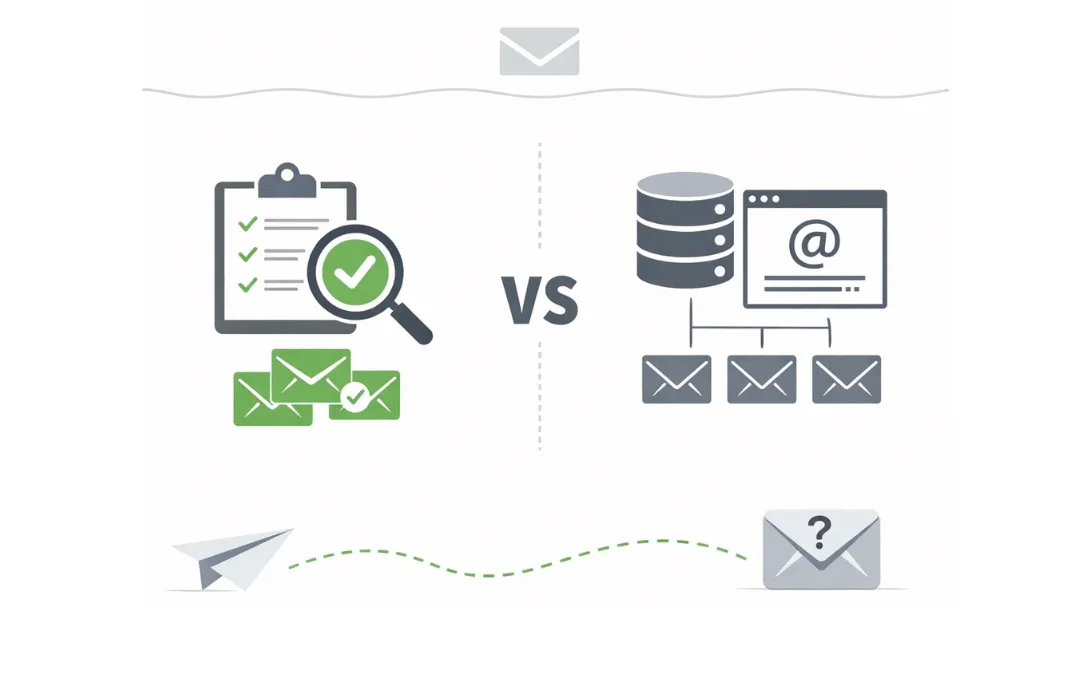
Database scraped email lists offer volume but lack relevance. Human-verified contact lists deliver 7x higher reply rates by targeting actual decision makers with current roles and real buying context. Learn why smaller, verified lists consistently outperform large scraped databases in cold email campaigns.
Why Your Cold Email Campaign Gets No Replies
If you have ever run a cold email campaign that looked perfect on paper but delivered silence in reality, you already know the uncomfortable truth.
The problem was not your subject line. It was not your copy. It was not even your offer.
It was the list.
Most businesses start with database scraped emails because that is what the market normalized. Millions of contacts. Filters for job title and industry. A comforting sense of scale. On the surface, it feels like momentum.
Until the replies do not come.
The Hidden Cost of Database Scraped Email Lists
One of our SaaS customers came to us after sending over 40,000 emails using a well known database provider. Open rates looked fine. Clicks were acceptable. Replies were nearly nonexistent. Worse, their domain reputation started slipping and inbox placement became unpredictable.
When we audited the data, the issue was obvious. The contacts were technically “valid” but practically irrelevant.
Outdated roles. Wrong departments. Companies that looked right on a spreadsheet but had zero buying context.
Database scraped emails are built for volume, not intent. They are collected through automation, scraping, inferred patterns, and recycled sources. Even when they pass email verification tools, they often fail the most important test.
Would this person actually care?
How Human-Verified Email Lists Work Differently
Human-verified emails work differently because humans think differently.
At Accurate List, every list we build starts with a real conversation about who the customer actually wants to reach. Not just titles, but decision influence. Not just industries, but buying triggers. Not just company size, but operational reality.
Real Customer Example: Healthcare Provider Targeting
One of our agency customers targeting healthcare providers learned this the hard way. Their previous list vendor delivered thousands of “IT Directors” across hospitals. The campaign struggled.
When we rebuilt the list manually, we discovered most technology decisions were driven by operations heads and compliance leads, not IT.
Same industry. Same company size. Completely different outcome.
With a smaller, human-verified list, their reply rate jumped from under 2 percent to over 14 percent. No change in copy. No fancy personalization. Just relevance.
That is the difference.
Why Email Reply Rates Depend on Recognition, Not Scale
Replies are driven by recognition. The moment someone opens your email and thinks, “This is actually for me,” you have won half the battle. Scraped databases cannot consistently create that moment because they do not understand context. Humans do.
Another Accurate List customer in B2B services reduced their send volume by 70 percent after switching to custom built lists. Their pipeline grew anyway. Sales cycles shortened. Spam complaints dropped to zero.
More emails did not create more opportunities. Better emails did.
Cold Email Deliverability in 2026
In 2026, inboxes are more guarded than ever. Email filters are smarter. Buyers are more selective. The tolerance for irrelevant outreach is gone.
Human-verified lists do not scale as fast. That is exactly why they work.
The Deliverability Advantage of Verified Contact Lists
Sending emails to engaged, relevant contacts creates positive sender reputation signals. Opens, replies, and forwards tell inbox providers your emails have value. Low engagement from scraped lists triggers spam filters and damages domain reputation.
Quality lists protect your sender reputation because recipients actually engage with your outreach.
Comparing Email List Quality: Key Metrics
| Metric | Database Scraped Lists | Human-Verified Lists |
|---|---|---|
| Average Reply Rate | 1-3% | 8-15% |
| Data Accuracy | 60-75% | 95%+ |
| Decision Maker Targeting | Generic titles | Verified buying roles |
| Domain Reputation Impact | High risk | Protected |
| Cost Per Qualified Reply | Higher | Lower |
Frequently Asked Questions: Email List Quality
Q: What is the difference between scraped and verified email lists?
A: Scraped email lists are collected through automated tools that gather contact information from websites, directories, and public sources. Human-verified lists are built through manual research where each contact is validated for current role, decision-making authority, and relevance to your specific offer.
Q: Why do human-verified email lists have higher reply rates?
A: Human verification ensures you reach actual decision makers with current roles and real buying context. Reply rates increase because recipients recognize the email as relevant to their specific situation, not generic outreach.
Q: Are database email lists always inaccurate?
A: Not always, but accuracy degrades quickly. Job changes, company transitions, and role shifts happen constantly. Scraped databases rely on static snapshots that become outdated within months. Human verification catches these changes before your campaign launches.
Q: How much smaller are human-verified lists compared to scraped databases?
A: Typically 60-80% smaller, but results improve dramatically. One Accurate List customer reduced send volume by 70% while increasing pipeline. Quality targeting eliminates waste and improves outcomes.
Q: Can I use email verification tools to clean scraped lists?
A: Verification tools check if emails exist, not if they are relevant. They catch syntax errors and inactive addresses but miss outdated roles, wrong departments, and irrelevant contacts. Human verification solves the relevance problem, not just the technical one.
Q: How does list quality affect email deliverability?
A: Poor engagement from irrelevant emails signals low value to inbox providers, triggering spam filters. High quality lists generate natural engagement (opens, replies, forwards) that protects sender reputation and ensures inbox placement.
Q: What industries benefit most from human-verified email lists?
A: Any B2B industry with complex buying processes benefits significantly. Healthcare, enterprise software, professional services, and technical solutions see the highest improvement because decision making involves multiple stakeholders with specific roles.
Q: How often should verified email lists be updated?
A: Best practice is quarterly updates for active campaigns. Job changes and organizational shifts happen constantly. Fresh verification every 90 days maintains accuracy and protects campaign performance.